
Reception and entry
Glass, seating, counters, and entry matting form the first thing a visitor sees. Fingerprints on the door and grit on the mat register faster than anything else in the building.
Serving Glendale, Arizona & surrounding areas
Mon–Fri 8am–6pm · Sat 9am–2pm
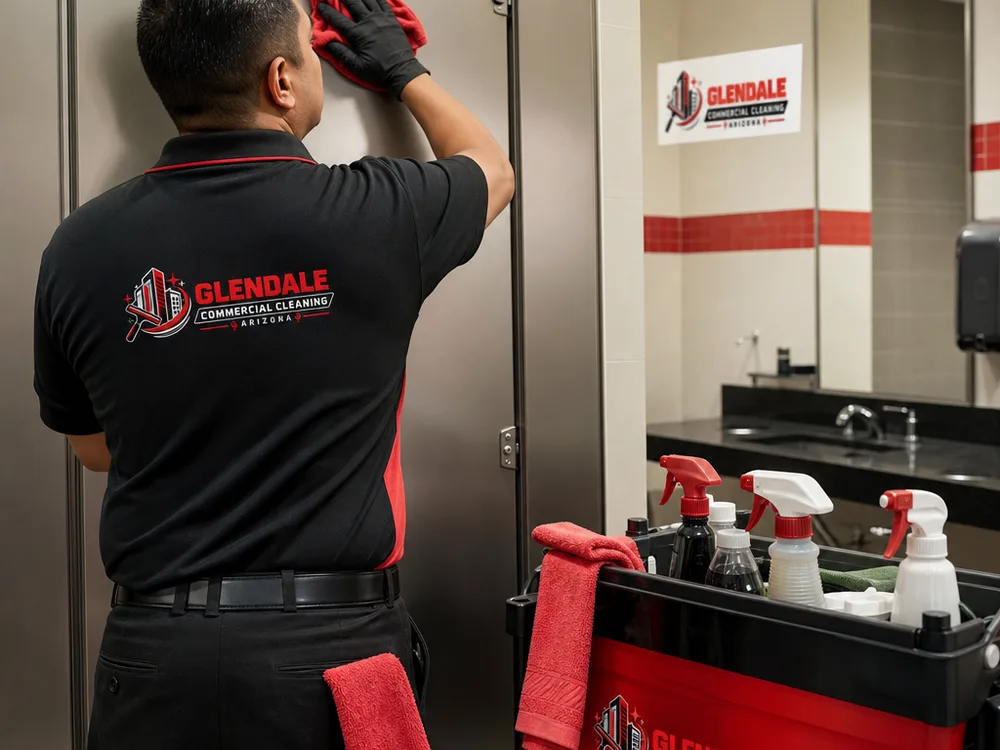
Workplace Cleaning Service
Cleaning shaped around how a Glendale office actually works: desk zones and shared surfaces, conference rooms between bookings, the kitchen, and visits timed so staff never work around a cart.
Around Your Workday
Offices hold documents, equipment, and personal space. Getting cleaning right here is as much about boundaries and timing as it is about the tasks themselves.
Glendale Commercial Cleaning provides commercial cleaning and janitorial service for Glendale, Arizona businesses, with scopes built around your hours, traffic patterns, and actual surfaces. The plan changes between a quiet professional office, a high-touch retail floor, and a shared multi-tenant suite.
Our approach is straightforward:
You will find us near Glendale’s downtown core at 5555 N 51st Ave, Suite 5, which helps when you need reliable service coordination for multi-tenant buildings, storefronts, and office corridors where timing matters.
Office Zones
Reception, desk areas, conference rooms, the kitchen, restrooms, and the corridors and copy areas between them each behave differently and are scoped separately.
Glass, seating, counters, and entry matting form the first thing a visitor sees. Fingerprints on the door and grit on the mat register faster than anything else in the building.
Clear surfaces are wiped, monitors and keyboards dusted where permitted, and floors vacuumed around the station. Papers and personal effects are never moved or rearranged.
Tables, chair arms, remotes, and whiteboard trays get reset between days. Rooms booked back to back collect crumbs and cup rings nobody has time to deal with.
Counters, sink basins, appliance exteriors, and cabinet fronts are cleaned nightly, with microwave interiors and refrigerator fronts on a named rotation your team can see.
Fixtures, mirrors, partitions, and dispensers are serviced each visit, with restocking from stock held onsite. Odor control in an office depends on consistency rather than volume of product.
Print stations, supply nooks, and circulation routes gather toner dust, paper scraps, and scuffing along the walls. These in-between spaces are easy to leave off a scope by accident.
Desk Boundaries
Trust in an office cleaning plan is built on predictability. Staff need to know exactly what happens at their desk overnight, and the rule has to be the same every night.
Core janitorial cleaning often includes:
Optional add-ons include interior glass, high dusting, employee-kitchen degreasing, and consumables tracking by request.
Many Glendale facilities prefer a rotating weekly detail list, allowing the space to stay sharp without turning every visit into a deep clean.
Meeting Spaces
Conference rooms carry the highest turnover of any office space. Resetting them properly is what stops a client meeting starting with someone wiping a table.
Deep cleaning commonly focuses on:
Whether you manage a small Downtown Glendale office, a busy storefront, or a shared multi-tenant suite, periodic deep cleaning prevents the slow decline that makes a technically clean space feel worn.
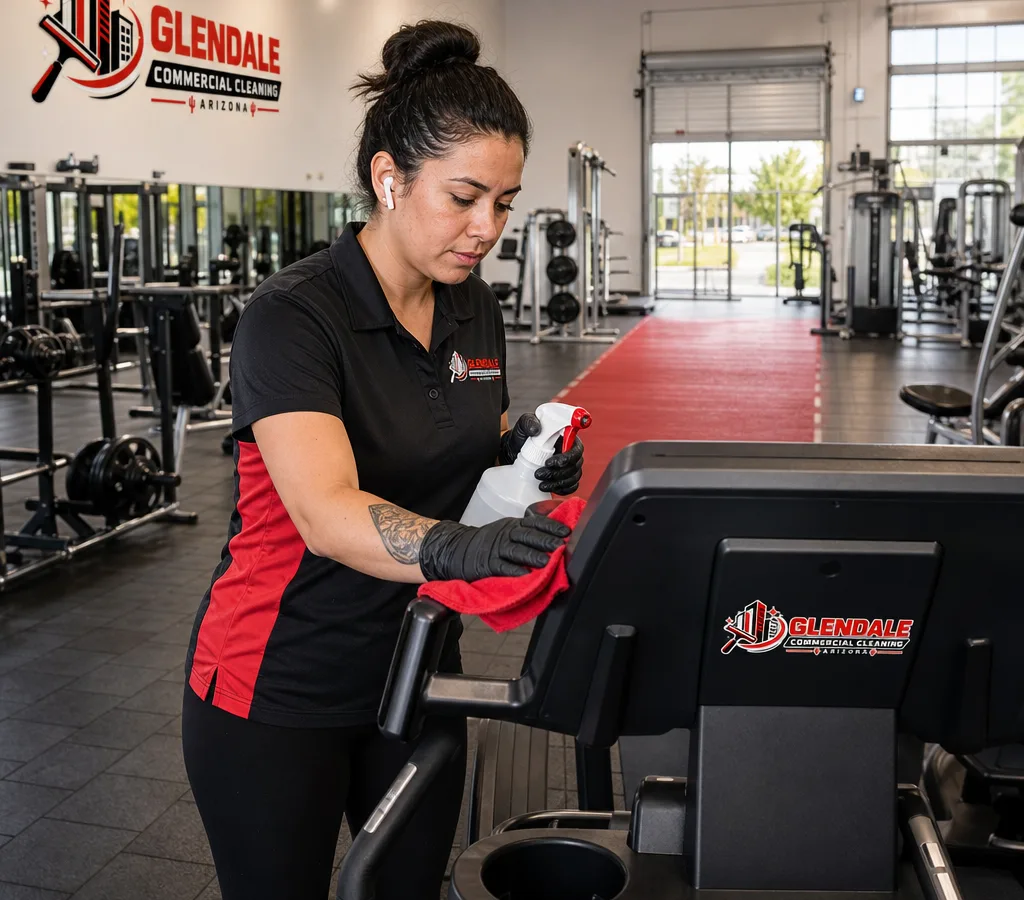
Schedule Fit
An office cleaning schedule works when nobody notices it happened. That requires planning against your real occupancy pattern, not a standard nightly slot.
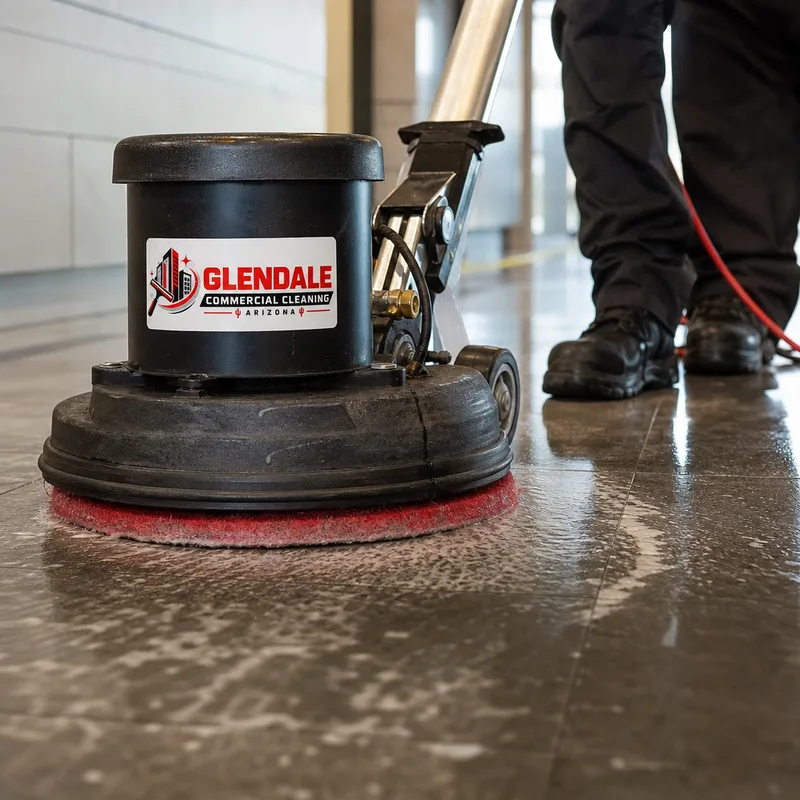
Common commercial floor care work includes:
The entryway is usually the highest-wear zone. Regular edge work and targeted attention near doors helps stop grit from becoming scratches or permanent haze.
Lane Boundaries
Several services touch an office building. Separating them keeps your scope honest and stops the same room being billed under two headings.
A practical post-construction scope often includes:
For multi-phase projects, we can schedule a rough clean between trades and a final clean at handoff.
Pricing Factors
Headcount and room count shape office cleaning cost more than floor area alone. Thirty people in an open plan with two restrooms is a lighter route than the same square footage split into private offices and meeting rooms.
Visit frequency, kitchen size, interior glass volume, and whether you want day porter hours during the business day all move the figure further. We walk the suite, count the rooms and restrooms, and build the estimate from the written scope.
Workplace Questions
Office managers tend to ask about desk handling, hybrid-week frequency, security and after-hours access, kitchen responsibility, small suites, and whether one-off meeting prep is possible.
No. Loose paper, files, and personal items are left exactly as found, and clear surface area around them is wiped. Where a team adopts a clear-desk habit at the end of the day, more of each workstation can be cleaned properly. The rule is written into the scope so every crew member applies it identically.
Match frequency to occupancy rather than to the week. Offices busiest Tuesday through Thursday often do well with service concentrated on those evenings, plus a lighter pass to cover the quieter days. Restrooms and kitchens usually still want attention on in-office days regardless of how many desks are occupied.
Access arrangements are documented before the first visit: alarm codes or fobs, which doors are used, lockup steps, and who to contact outside hours. Where your building has its own security protocol or sign-in, the route is planned to match it. Secure rooms can be excluded or cleaned only while a staff member is present.
Counters, sinks, appliance exteriors, and cabinet fronts are part of the nightly route, with microwave interiors and refrigerator fronts on a visible rotation. Clearing out old food from the refrigerator is normally kept with your team, since deciding what to discard is not a call a cleaning crew should make.
Small offices are a large share of this work in Glendale. A compact suite with one restroom and a kitchenette can be covered quickly on a once or twice weekly schedule. The scope is written the same way it would be for a larger floor, listing rooms and tasks, so you know what each visit includes.
Yes. One-time preparation ahead of a board meeting, audit, or client tour can be booked separately from the regular schedule, usually focused on reception, conference rooms, restrooms, and glass. Giving us the areas visitors will actually see lets the available hours go where they will be noticed.
Plan Your Office
Tell us your headcount, your busiest days, and how the suite is laid out. We will walk it, write the rooms and tasks down, and propose evening timing that stays clear of your team entirely.
Request a quote
Send the basics and we will follow up to arrange a walkthrough.