
Edges, corners, baseboards
Dust and mop film collect where equipment cannot reach, then darken the line between wall and floor. Hand detailing along those edges is usually what makes a room read as genuinely clean again.
Serving Glendale, Arizona & surrounding areas
Mon–Fri 8am–6pm · Sat 9am–2pm
Periodic Facility Resets
Scheduled resets for Glendale facilities where buildup has outrun the nightly routine: edges, grout, vents, and the surfaces behind and underneath whatever normally sits in front of them.
Beyond The Routine
Buildup arrives slowly enough that nobody notices the day it starts. A reset pulls the whole facility back to a defined standard that recurring visits are able to maintain.
Glendale Commercial Cleaning provides commercial cleaning and janitorial service for Glendale, Arizona businesses, with scopes built around your hours, traffic patterns, and actual surfaces. The plan changes between a quiet professional office, a high-touch retail floor, and a shared multi-tenant suite.
Our approach is straightforward:
You will find us near Glendale’s downtown core at 5555 N 51st Ave, Suite 5, which helps when you need reliable service coordination for multi-tenant buildings, storefronts, and office corridors where timing matters.
Reset Scope
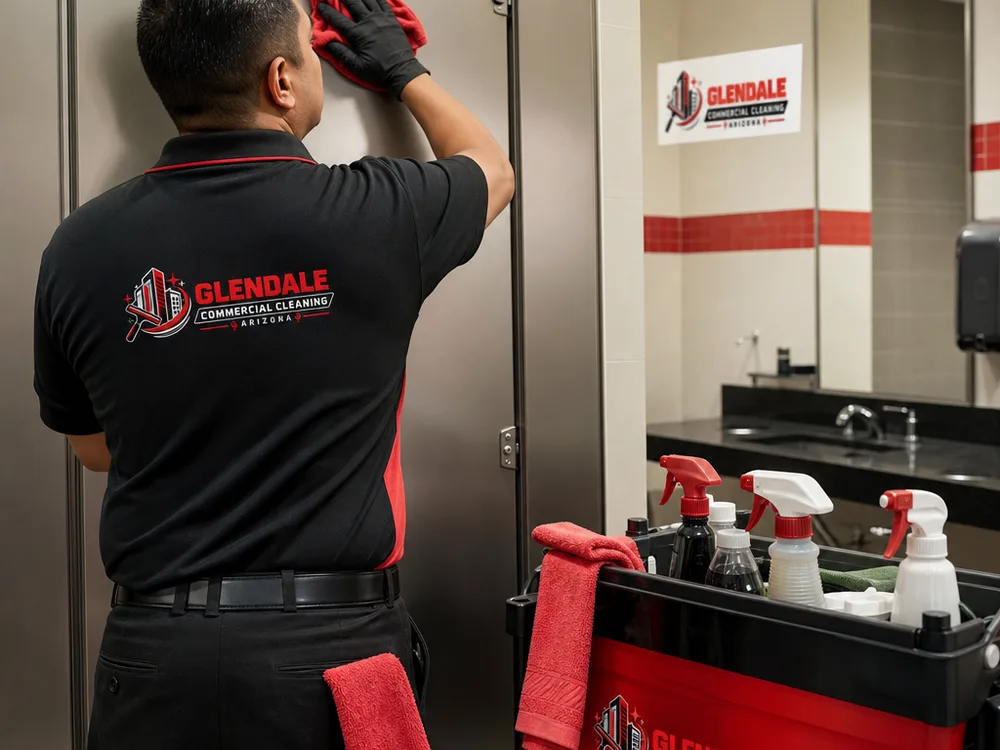
Edges and corners, high surfaces, restroom scale, interior glass, kitchen grease, and the floor detail under furniture: these six carry nearly all of the accumulated grime in a commercial space.
Dust and mop film collect where equipment cannot reach, then darken the line between wall and floor. Hand detailing along those edges is usually what makes a room read as genuinely clean again.
Ledges, door frames, light housings, and supply vent louvers hold dust that drifts back down for weeks. Working top to bottom means the floor is cleaned once rather than twice.
Mineral deposits around fixture bases, partition feet, and grout lines resist routine chemistry. Scale removal and grout agitation restore color that daily cleaning cannot reach.
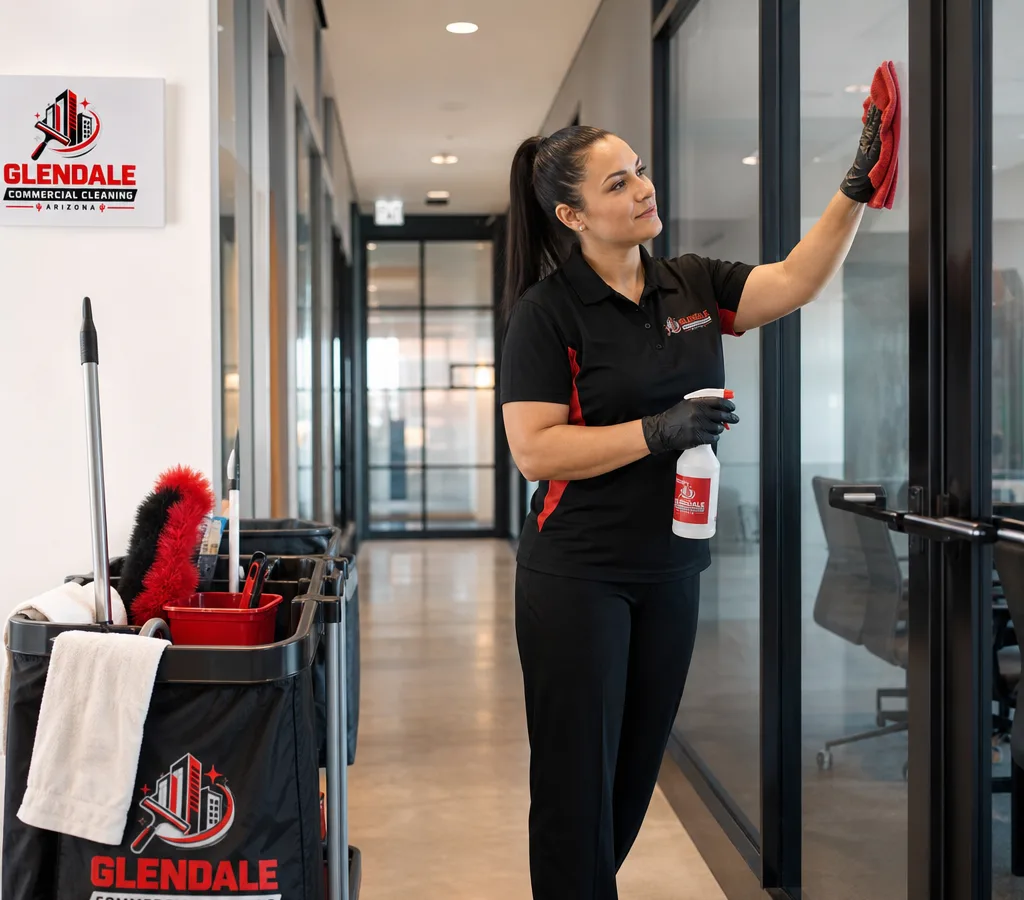
Partition glass, side lights, and door frames pick up hand oils along the same contact band. Detailing the frames and tracks alongside the panes stops streaks returning within a day.
Airborne grease settles on cabinet faces, appliance sides, and the wall behind a microwave. Degreasing those surfaces is slow work that a nightly wipe-down was never scoped for.
Desks, racks, and seating get moved where it is safe to do so, and the floor beneath them is cleaned to match the open areas. That contrast is usually visible before the work starts.
Right Timing
Timing changes how much a deep clean is worth. The same scope delivers very different value depending on what happens in the building immediately afterward.
Core janitorial cleaning often includes:
Optional add-ons include interior glass, high dusting, employee-kitchen degreasing, and consumables tracking by request.
Many Glendale facilities prefer a rotating weekly detail list, allowing the space to stay sharp without turning every visit into a deep clean.
Access Planning
Deep cleaning takes longer per room and often needs furniture moved. Planning the sequence protects your operation while still letting the crew work properly.
Deep cleaning commonly focuses on:
Whether you manage a small Downtown Glendale office, a busy storefront, or a shared multi-tenant suite, periodic deep cleaning prevents the slow decline that makes a technically clean space feel worn.
Surface Methods
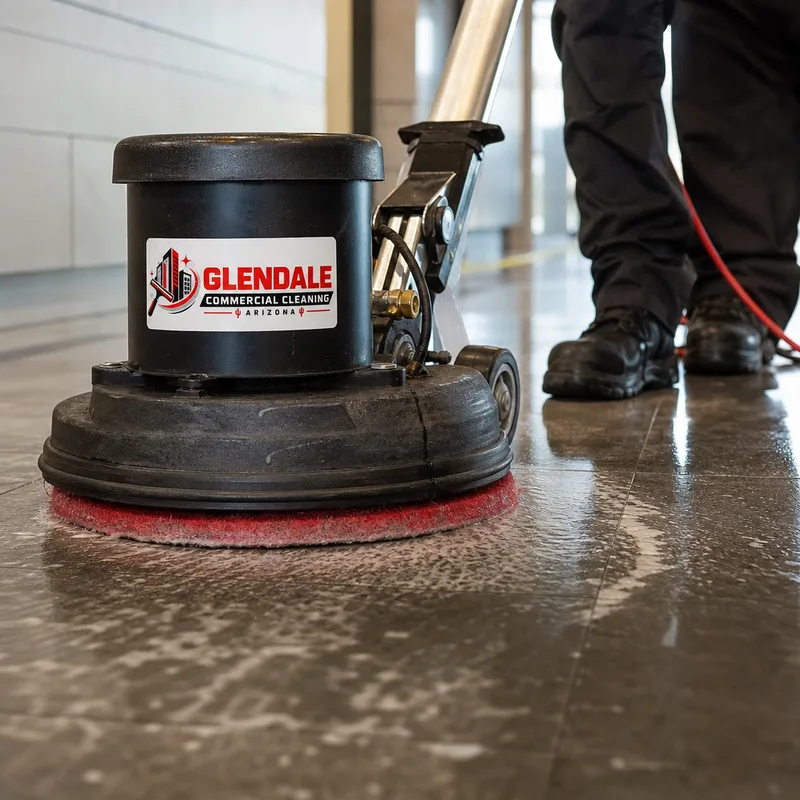
Aggressive cleaning removes grime and finish together. Deciding the method per surface is what separates a reset from damage that shows up a month later.
Common commercial floor care work includes:
The entryway is usually the highest-wear zone. Regular edge work and targeted attention near doors helps stop grit from becoming scratches or permanent haze.
Lane Boundaries
These two services get confused constantly, and the confusion costs money. One maintains a standard; the other rebuilds it. They are priced and scheduled on different logic.
A practical post-construction scope often includes:
For multi-phase projects, we can schedule a rough clean between trades and a final clean at handoff.
Cost Drivers
Condition drives deep cleaning cost more than anything else. Two rooms of identical size price very differently when one has eighteen months of grout film and ledge dust and the other was reset last quarter.
Scope also shifts the figure: restroom count, how much furniture has to be moved, kitchen grease levels, and whether floors need machine work. A walkthrough sets the condition baseline, and the estimate follows from it.
Reset Questions
Managers booking a reset usually ask about interval, overnight feasibility, the line against routine service, furniture moves, how long results hold, and whether a whole building is required.
Quarterly suits most commercial spaces, and semi-annual works where traffic is light and the routine is strong. Restrooms, entries, and breakrooms often justify a tighter interval than the rest of the building. Rather than fixing one number for the whole facility, interval is set per zone based on how fast each one shows wear.
Often, though not always in one night. Detail work takes longer per room than routine cleaning, and scrubbed grout or wet-cleaned surfaces need drying time before foot traffic returns. Larger facilities are usually phased across several nights or a weekend, with one zone finished completely before the next one starts.
Your janitorial route holds a standard that already exists. A reset rebuilds one that has slipped, or establishes the first one. Scale on fixture bases, grout film, ledge dust, and grease on cabinet faces all sit outside a nightly pass. Once the reset is done, the routine checklist is what keeps those areas from sliding back.
Light and safely movable items yes, and the floor underneath gets cleaned to match the open area. Heavy equipment, anything bolted down, and items with cabling or live connections stay where they are unless your team handles the move. What gets moved and by whom is settled before the visit so the crew is not improvising.
That depends almost entirely on the routine that follows. With a written janitorial scope running behind it, a reset typically holds until the next scheduled one. Without recurring service, entries, restrooms, and breakrooms start showing again within weeks because those three areas take the heaviest daily use.
Yes, and targeting is often the better spend. Restrooms, breakrooms, and entry zones carry most of the visible buildup in a commercial facility, so treating those three alone can change how the whole space reads. Office and conference areas can then be scheduled on a slower cycle or added to a later phase.
Book A Reset
Show us the rooms that have drifted furthest and tell us when the building can release them. Scoping is done by condition, phased around your hours, with the estimate following the walkthrough.
Request a quote
Send the basics and we will follow up to arrange a walkthrough.