Machine scrubbing textured floors
Textured tile, safety flooring, and sealed concrete hold soil in their profile that mopping just redistributes. An autoscrubber with the right pad lifts it and recovers the water in one pass.
Serving Glendale, Arizona & surrounding areas
Mon–Fri 8am–6pm · Sat 9am–2pm
Commercial Floor Maintenance
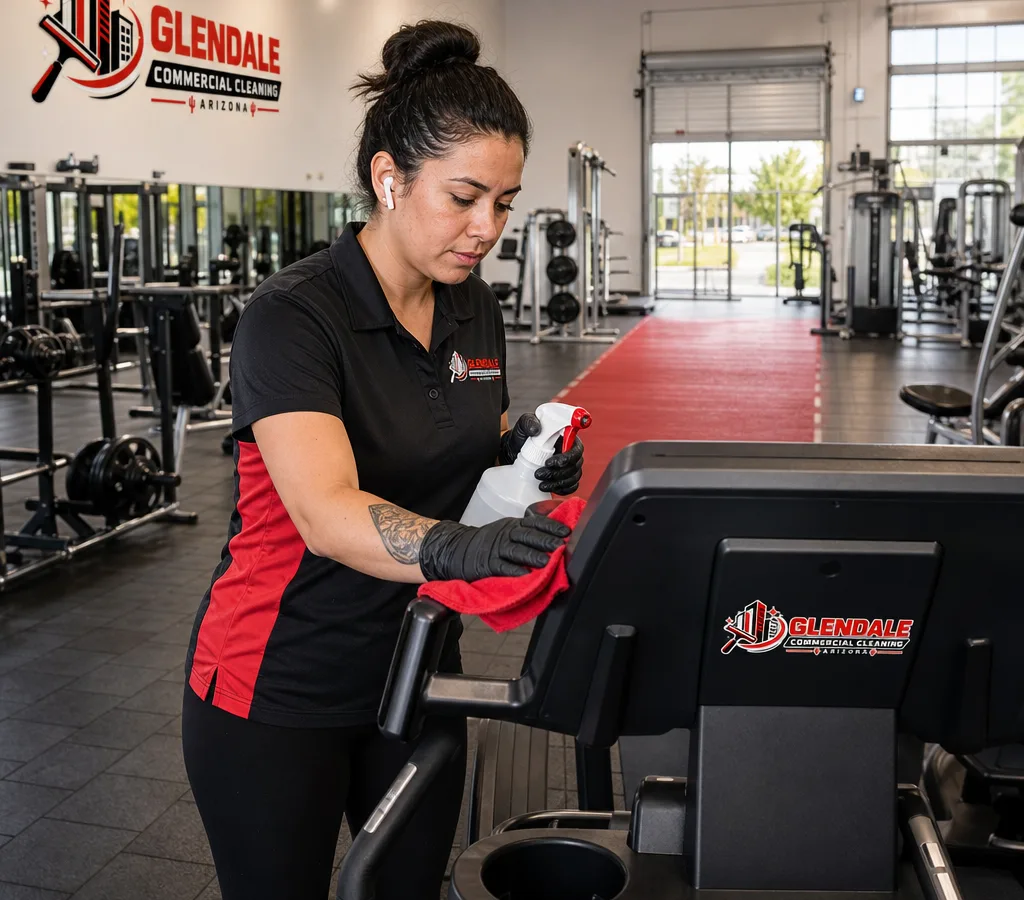
Hard floor and carpet maintenance for Glendale commercial spaces, where the method is chosen for the surface in front of us: scrubbing, stripping, refinishing, burnishing, or extraction.
Surface First
Flooring responds to chemistry and machines in very different ways. Identifying what is actually underfoot comes before any recommendation about cycles or equipment.
Glendale Commercial Cleaning provides commercial cleaning and janitorial service for Glendale, Arizona businesses, with scopes built around your hours, traffic patterns, and actual surfaces. The plan changes between a quiet professional office, a high-touch retail floor, and a shared multi-tenant suite.
Our approach is straightforward:
You will find us near Glendale’s downtown core at 5555 N 51st Ave, Suite 5, which helps when you need reliable service coordination for multi-tenant buildings, storefronts, and office corridors where timing matters.
Method Range
Machine scrubbing, stripping and recoating worn finish, burnishing, carpet extraction, spot and stain treatment, and entry grit control cover nearly every commercial floor condition.
Textured tile, safety flooring, and sealed concrete hold soil in their profile that mopping just redistributes. An autoscrubber with the right pad lifts it and recovers the water in one pass.
When VCT finish has yellowed, scratched through, or built up unevenly, the old coats come off entirely and fresh ones go down. Dry time between coats is scheduled rather than rushed.
High-speed burnishing restores shine on a finish that is still sound, which extends the interval before a full strip is justified. Done too often it burns the coat, so cycles are set deliberately.
Extraction pulls embedded soil out of pile that vacuuming has already thinned. Pre-spray dwell and a measured drying window keep carpet from wicking stains back as it dries.
Scuffs, adhesive residue, gum, and spills respond to targeted treatment well before a whole-floor service is due. Catching them early is what keeps a stain from becoming permanent.
Matting coverage, edge vacuuming, and frequent attention inside the door stop desert dust from acting as abrasive. Nothing else in floor care returns as much for as little.
Hard Floors
The same machine helps one floor and damages the next. Reading the surface and the condition of its coating decides which service belongs on the schedule.
Core janitorial cleaning often includes:
Optional add-ons include interior glass, high dusting, employee-kitchen degreasing, and consumables tracking by request.
Many Glendale facilities prefer a rotating weekly detail list, allowing the space to stay sharp without turning every visit into a deep clean.
Carpet Care
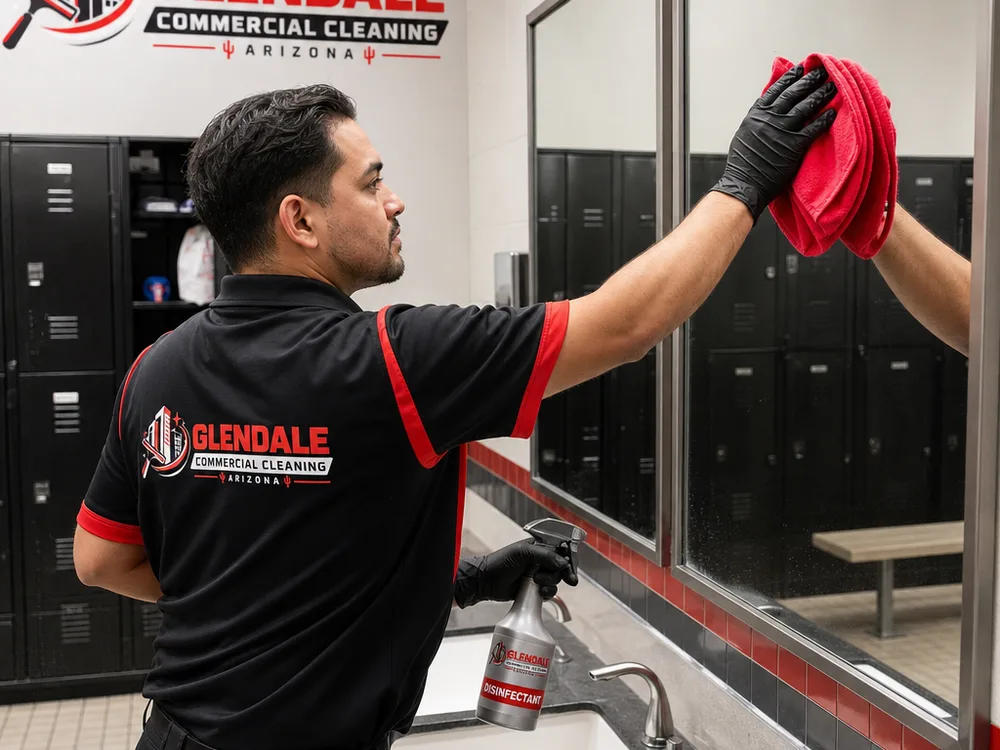
Carpet fails in traffic lanes well before the rest of the field wears out. Lane-focused maintenance extends the life of the whole installation at modest cost.
Deep cleaning commonly focuses on:
Whether you manage a small Downtown Glendale office, a busy storefront, or a shared multi-tenant suite, periodic deep cleaning prevents the slow decline that makes a technically clean space feel worn.
Cycle Planning
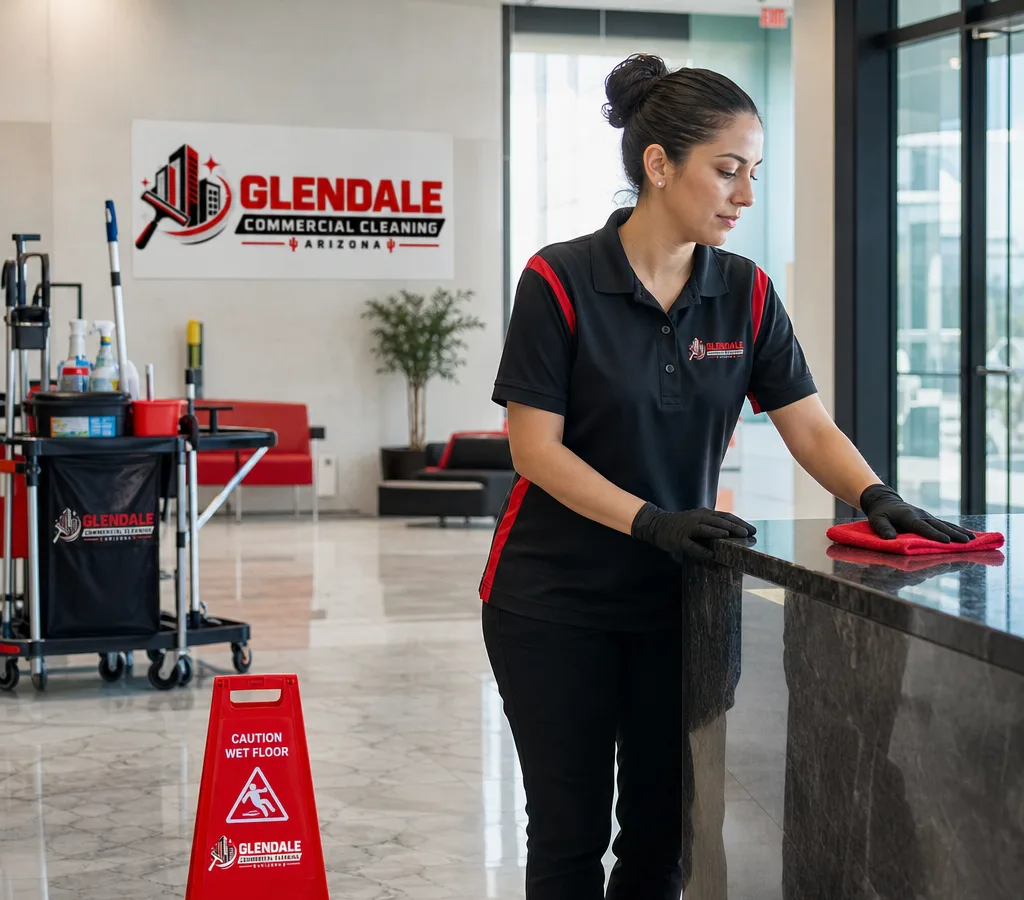
Overservicing a floor wears it as surely as neglect does. Cycles work best when tied to measured traffic and visible condition instead of the calendar alone.
Common commercial floor care work includes:
The entryway is usually the highest-wear zone. Regular edge work and targeted attention near doors helps stop grit from becoming scratches or permanent haze.
Project Logistics
Machine work needs the floor cleared and then left alone while it dries or cures. Sequencing is most of what makes a floor project painless for your staff.
A practical post-construction scope often includes:
For multi-phase projects, we can schedule a rough clean between trades and a final clean at handoff.
What Moves Cost
Method and area drive floor care pricing together. Scrubbing open tile goes quickly, while stripping and refinishing that same area involves several coats, controlled dry time, and considerably more labor.
Condition and obstruction adjust it further: worn finish, heavy furniture, tight layouts, and after-hours access all add time. We measure the floor, identify the surface, and quote from the walkthrough.
Floor Questions
Common ground before a floor project: recoat versus strip, how long new finish needs, carpet intervals, polished concrete, dull tile after mopping, and whether one visit can cover mixed surfaces.
Look at whether finish still covers the tile. If the coating is scuffed and dull but intact, a scrub and recoat restores it at lower cost and less downtime. Once traffic lanes have cut through to bare tile, or old finish has built up unevenly at the edges, stripping back and rebuilding the coats is the only result that lasts.
Each coat needs its own dry time before the next goes down, and the finished floor needs longer still before normal traffic. Most commercial jobs are scheduled overnight or across a weekend so curing happens while the space is closed. Rolling heavy loads over fresh finish should wait longer than foot traffic does.
Traffic lanes set the interval, not total square footage. Busy corridors and entry areas often want extraction two or three times a year, while private offices can go considerably longer. Interim encapsulation between extractions keeps lanes looking even and dries fast enough to run overnight without affecting the next morning.
Neutral chemistry and consistent dust control. Polished concrete gets its appearance from mechanical polish rather than an applied coating, so harsh alkaline or acidic products etch the surface and leave a dullness that cleaning will not reverse. Routine dust mopping plus periodic damp cleaning with a neutral product maintains it.
Usually mop film: cleaner left behind because the solution was too strong, the water was reused past its life, or the floor was never rinsed. That residue attracts soil and hazes the surface. Machine scrubbing with recovery removes the accumulated film, and correcting dilution and rinse practice stops it rebuilding.
Yes, with sequencing. A building with carpet, VCT, and tile needs different equipment and different drying windows for each, so the order of work matters more than the total hours. Wet carpet work and hard floor finishing are kept apart, and zones are scheduled so no area is walked on before it is ready.
Plan Floor Work
Tell us which surfaces you have and where the wear shows worst. Each floor gets identified, matched to the method it actually needs, and placed on a cycle that fits your access hours.
Request a quote
Send the basics and we will follow up to arrange a walkthrough.