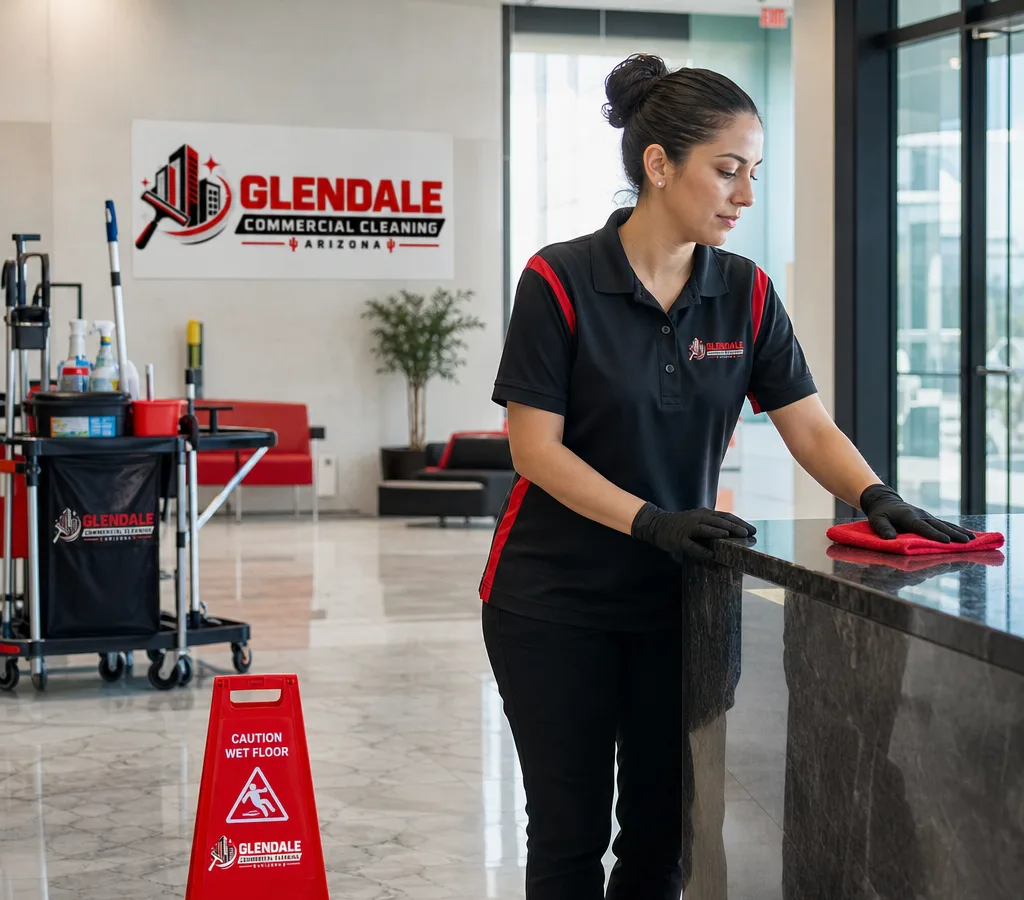
Waiting room and reception
Seating, arms, side tables, check-in surfaces, and door hardware are the most-touched items in the building. Arms of waiting chairs take more hands per day than almost any other surface.
Serving Glendale, Arizona & surrounding areas
Mon–Fri 8am–6pm · Sat 9am–2pm
Clinical Space Cleaning
Cleaning for Glendale clinics and practices where the standard is set by your protocols: waiting rooms, exam rooms, high-touch disinfection, restrooms, and the privacy that comes with it.
Contact Time Matters
A disinfectant works only if it stays wet on the surface for the time its label specifies. Wiping it off early looks diligent and achieves very little.
Glendale Commercial Cleaning provides commercial cleaning and janitorial service for Glendale, Arizona businesses, with scopes built around your hours, traffic patterns, and actual surfaces. The plan changes between a quiet professional office, a high-touch retail floor, and a shared multi-tenant suite.
Our approach is straightforward:
You will find us near Glendale’s downtown core at 5555 N 51st Ave, Suite 5, which helps when you need reliable service coordination for multi-tenant buildings, storefronts, and office corridors where timing matters.
Practice Areas
Waiting and reception, exam and treatment rooms, patient restrooms, corridors with their shared touchpoints, and staff areas each carry a different standard inside one practice.
Seating, arms, side tables, check-in surfaces, and door hardware are the most-touched items in the building. Arms of waiting chairs take more hands per day than almost any other surface.
Hard surfaces, fixtures, and floors are cleaned then disinfected with the full contact time observed. Room turnover between patients stays with clinical staff under your protocols.
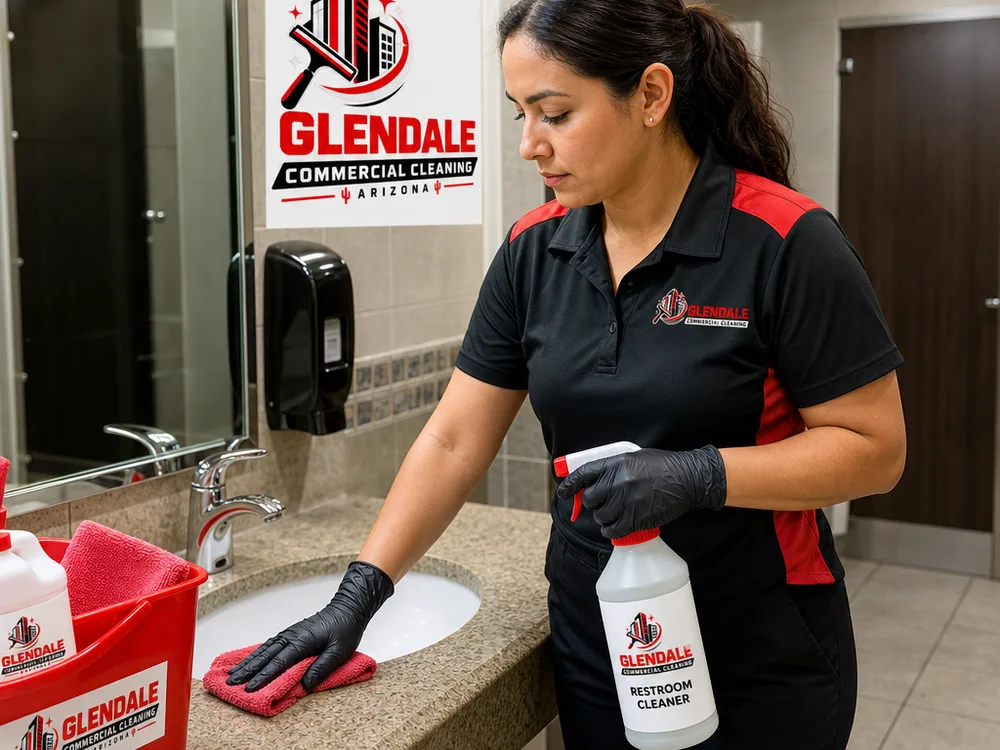
Fixtures, floors, grout, dispensers, and grab bars are serviced each visit. Restroom condition in a healthcare setting is read as a direct signal about clinical standards.
Handrails, push plates, light switches, and shared door hardware link every room in the practice. These are the surfaces that move contamination between areas.
Break rooms, lockers, and staff restrooms get cleaned to the general-area standard, keeping materials and cloths separate from anything used clinically.
Protocol Alignment
A practice already has infection control requirements set by its own policy and regulator. Cleaning aligns to those requirements rather than offering a competing standard.
Core janitorial cleaning often includes:
Optional add-ons include interior glass, high dusting, employee-kitchen degreasing, and consumables tracking by request.
Many Glendale facilities prefer a rotating weekly detail list, allowing the space to stay sharp without turning every visit into a deep clean.
Patient Privacy
A practice holds confidential information in rooms a cleaning crew works in. Handling that properly is a condition of the work, not an added courtesy.
Deep cleaning commonly focuses on:
Whether you manage a small Downtown Glendale office, a busy storefront, or a shared multi-tenant suite, periodic deep cleaning prevents the slow decline that makes a technically clean space feel worn.
Schedule Fit
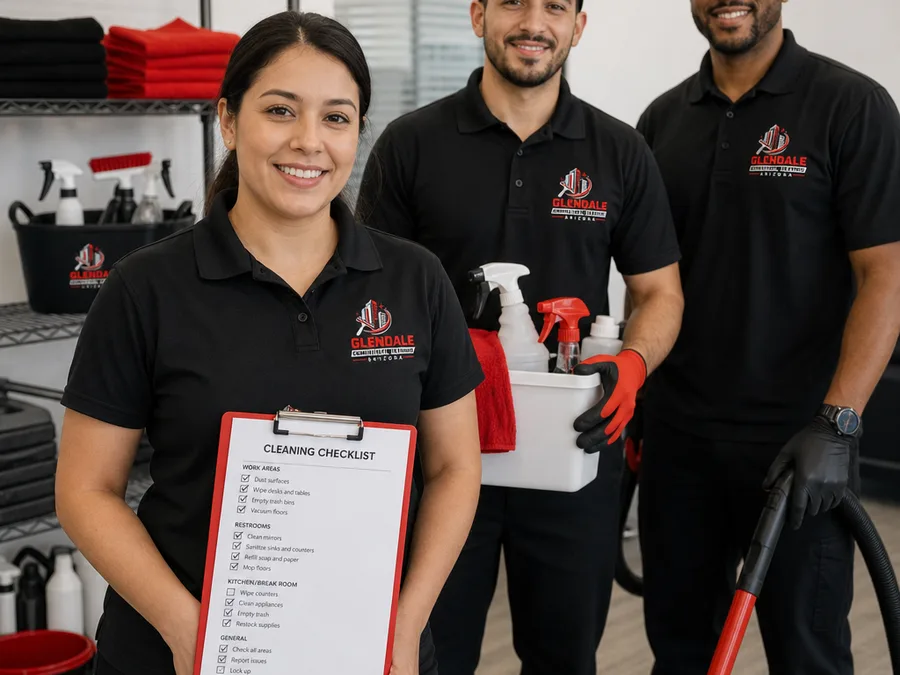
Clinical schedules are tight and run late. The cleaning window sits after the last patient and has to be finished and dry before the first arrives.
Common commercial floor care work includes:
The entryway is usually the highest-wear zone. Regular edge work and targeted attention near doors helps stop grit from becoming scratches or permanent haze.
Cost Drivers
Room count drives medical office cleaning more than total area. Eight exam rooms each needing cleaning and disinfection with observed contact times is a longer visit than an open office of the same footprint.
Restroom count, how many areas carry a clinical standard, the products your protocols require, and visit frequency all shape it further. We walk the practice after hours and estimate from the written scope, room by room.
Practice Questions
Practices ask about disinfection standards, who turns over exam rooms, patient records and privacy, biohazard handling, and whether dental suites differ.
Yours. A practice has infection control requirements from its own policy and its regulator, and cleaning aligns to those rather than substituting a different standard. In practical terms that means using the products your protocols specify, observing the contact time on each label, and cleaning soil off a surface before disinfecting it, since a disinfectant over soil never reaches the surface.
No. Room turnover during a clinic session is clinical work and stays with your staff, who are trained for it and accountable under your protocols. Our side of it is the scheduled clean of those rooms outside session hours: hard surfaces, fixtures, floors, and touchpoints, cleaned and then disinfected with contact times observed properly.
By not touching it. Charts, paperwork, and screens are never read, moved, or rearranged, and a desk holding records is cleaned around rather than cleared. After-hours scheduling means clinical areas are worked with no patients present. Where your practice requires a confidentiality agreement, it is signed before the first visit rather than after.
No, and that boundary is firm. Clinical waste, sharps containers, and any regulated material stay entirely with your staff and the licensed handlers you contract for it. A cleaning crew does not move, empty, or consolidate those containers. General waste from waiting rooms, offices, and break areas is part of the routine scope.
Somewhat. Operatories free up individually rather than all at once, so timing often has to work room by room instead of sweeping through. Surface materials and the equipment around each chair also affect product choice. The underlying approach is the same: your protocols set the standard, clinical turnover stays with your team, and the scheduled clean is written down by room.
Practice Walkthrough
Tell us your room count, your close time, and the products your protocols require. A walkthrough after your last appointment gives us what we need to write the scope room by room.
Request a quote
Send the basics and we will follow up to arrange a walkthrough.